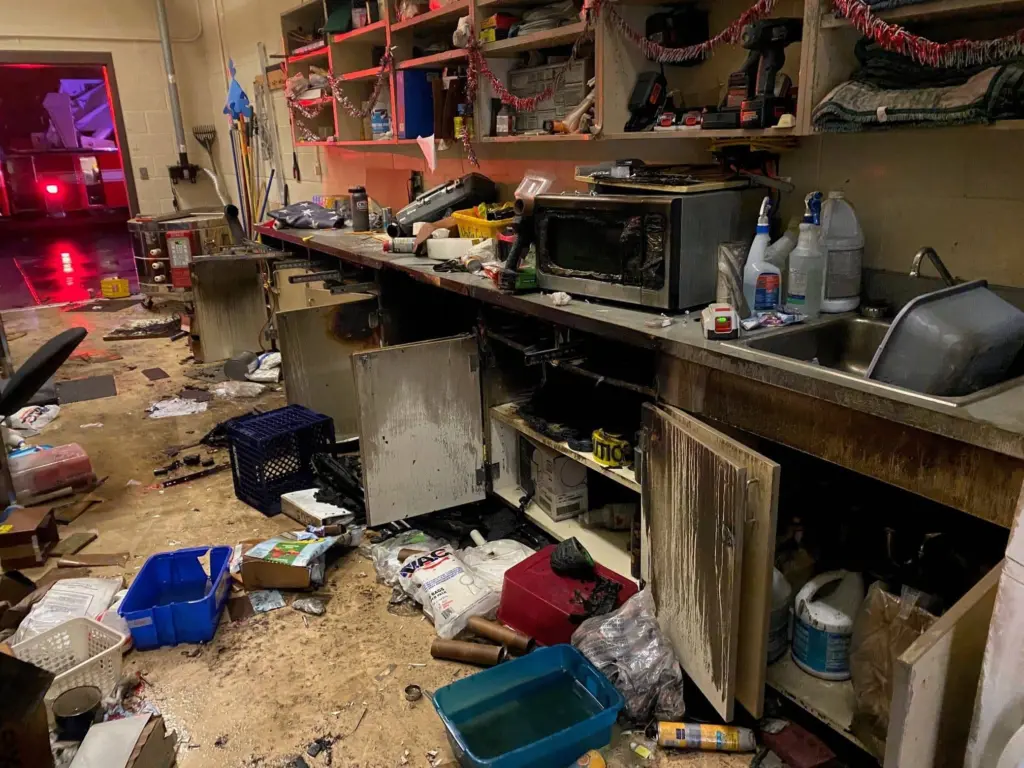
A lithium battery stored in a cabinet caused a fire at Miller Elementary School in northwest Bend Sunday night, 11/30/25. According to Bend Fire & Rescue:
Bend Fire & Rescue was called to Miller Elementary School on NW Crosby 9pm Sunday evening for the fire alarm sounding. Fire crews located the cause of the alarm in the gymnasium at the back of the building. The fire sprinkler system had activated due to a fire in the custodians’ workshop located just off the gym. Additional fire crews were dispatched to assist with the fire. The fire was kept from spreading past the workshop by the fire sprinkler system though smoke and water did spread throughout the gym. Crews remained on scene for an hour to help remove smoke and water from the school. The principal and school district maintenance staff assisted.
The fire was found to have been caused by a lithium battery stored in a cabinet in the workshop. The battery failed and started burning inside the cabinet before burning through the doors and into the room. Once the heat built up in the room the fire sprinkler system activated and stopped the fires spread. Fire sprinkler systems are found in all the public schools in Bend, even the oldest schools have had systems retrofitted over the years. These systems prevent fires from spreading and causing catastrophic damage. The damage at Miller Elementary is fixable and should only disrupt school for a day or two. The Bend LaPine staff are working on making the school for kids to return. They will make the call on any delays or cancellations to accomplish the safe return.
There are many benefits to lithium batteries, but they also need to be used and stored with caution. If not used correctly or if they get damaged, these batteries can catch fire or explode, even days after the fact. This doesn’t happen to every battery that is damaged, but there are steps you can take to protect your home and business.
According to the National Fire Protection Association (NFPA), here are safety tips for safe use and storage of lithium batteries:
•Purchase and use devices that are listed by a nationally recognized testing laboratory.
•Always follow the manufacturer’s instructions.
•Only use the battery that is designed for the device.
•Only use the charging cord that came with the device.
•Do not charge a device under your pillow, on your bed, or on a couch.
•Do not keep charging the device or device battery after it is fully charged.
•Keep batteries at room temperature when possible. Do not charge them at temperatures below 32°F (0°C) or above105°F (40°C).
•Store batteries away from anything that can catch fire. Consider a non-combustible cabinet or lithium battery storage specific containers.
As always, never throw any lithium batteries into the trash. These batteries will end up in the landfill where the process of trash collection, dumping, and packing into the landfill can cause the damage needed to start a fire. A fire in the landfill is a major concern of any solid waste department. This includes items with built in lithium batteries such as flashlights, alarms, and other small electronics. Contact your trash service provider, your local landfill, or many electronics stores for safe recycling options in your community.